Eni SpA has unveiled plans for around GBP 11 billion (approximately $14.55 billion) in “gross investments” in the United Kingdom between 2026 and 2030, focused on lower-carbon projects.
“The United Kingdom is a key country for Eni, where we now operate across the entire energy value chain, from renewable energy to fusion, from CCS to upstream activities”, Eni chief executive Claudio Descalzi said in an online statement Wednesday after meeting with UK Secretary of State for Energy Security and Net Zero Miatta Fahnbulleh in London.
“We are continuing to strengthen our industrial presence, particularly in lower-carbon sectors, thanks to an investment-friendly environment characterized by a long-term vision, significantly reaffirmed during today’s meeting, solid technological capabilities and a strong focus on innovation”.
Fahnbulleh said, “This GBP 11 billion investment is a vote of confidence in Britain’s industrial future – backing good, skilled jobs, strengthening our energy security and breathing new life into our industrial heartlands. From carbon capture in the North West to offshore wind in the North Sea, we want the communities that powered Britain for generations to be at the forefront of its energy future”.
In one of its ongoing projects in the UK, Liverpool Bay CCS, Eni recently completed installing what it said is “the first purpose-built offshore platform dedicated to carbon capture and storage (CCS) for industrial decarbonization in the world”.
The facility, called Douglas CCS, will receive carbon dioxide (CO2) captured from industrial facilities across North West England and North Wales. The facility will send these emissions through a network of existing offshore pipelines repurposed for CO2 transport. The CO2 will be carried to depleted natural gas reservoirs for permanent storage.
Liverpool Bay comprises the transport and storage infrastructure for the broader HyNet project, which spans North West England and North Wales. With a capacity of up to 4.5 million metric tons per annum (MMtpa), HyNet will store captured emissions in depleted hydrocarbon fields in the Irish Sea. The HyNet consortium plans to increase capacity to 10 MMtpa.
Eni said in its announcement of Douglas CCS’ installation last month that Liverpool Bay CCS was 50 percent complete.
“Eni CCUS Holding is also developing the Bacton CCS project, aimed at supporting the progressive decarbonization of hard-to-abate industrial sectors in the South East of the United Kingdom and providing a CO2 storage solution for industries across North West Europe”, Eni added in Wednesday’s announcement of its UK investment plan.
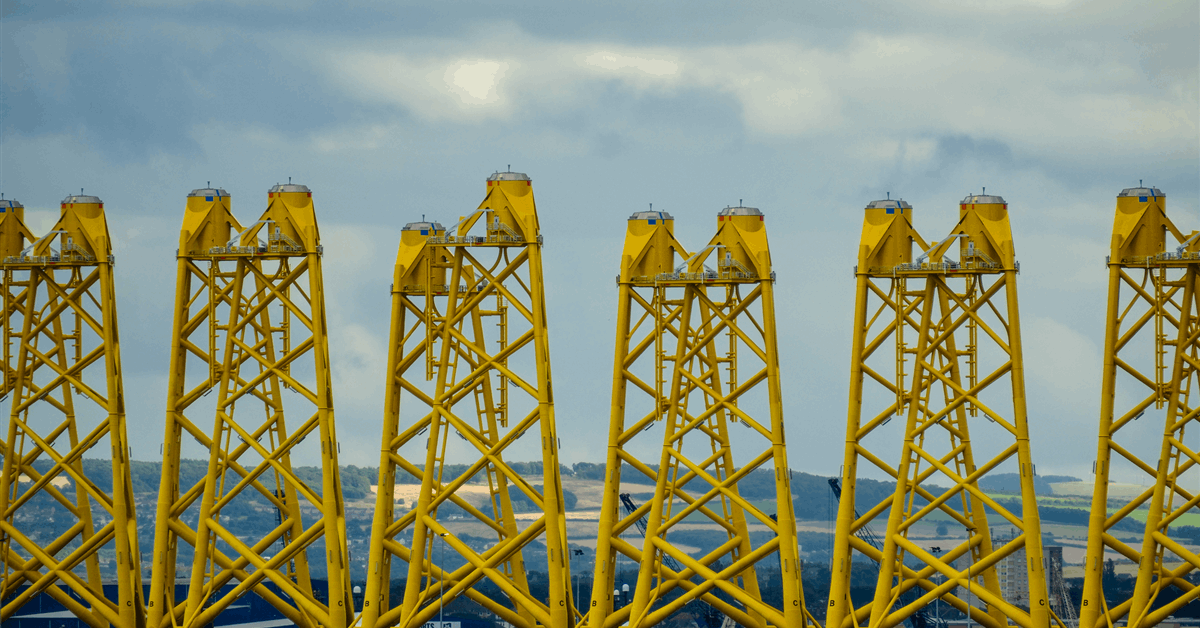
In the country’s renewables sector, Eni indirectly owns stakes in the 3.6-gigawatt Dogger Bank (under construction), the 560-megawatt Greenvolt (permitted) and the 1.4-GW Cenos (submitted for consent) offshore wind projects. Eni takes part in the projects through its joint venture with Norway’s HitecVision, Vårgrønn.
“Eni is also engaged in the development of fusion energy through a series of initiatives carried out in partnership with the United Kingdom Atomic Energy Authority to accelerate the commercialization of the sector, including the H3AT project and the RH3OVA joint venture”, Eni added Wednesday.
In oil and gas, Eni and Ithaca Energy PLC combined their upstream UK assets in 2024 with Eni acquiring a stake in Delek Group-controlled Ithaca. Last year Ithaca produced 119,000 barrels of oil equivalent a day, according to its annual report.
What do you think? We’d love to hear from you, join the conversation on the
Rigzone Energy Network.
The Rigzone Energy Network is a new social experience created for you and all energy professionals to Speak Up about our industry, share knowledge, connect with peers and industry insiders and engage in a professional community that will empower your career in energy.
This article was automatically fetched from an external source.